Apprenticeships

Supporting your future

Apply
Biology
A Level

Entry Requirements

Grades 9-5 in English, grade 9-6 in Maths and Combined Science or Biology and two or more GCSEs at grades 9-4.

Assessment

• 100% exam

Course Duration

• Two years

Exam Board

• OCR

Why Choose Biology A Level?

Biology is the study of life in all its forms, from the smallest microorganisms to the vast ecosystems that cover our planet. Choosing Biology A Level allows you to explore the intricate and fascinating mechanisms of life. Whether you are passionate about the natural world, intrigued by scientific research, or curious about the human body, studying Biology provides a solid foundation for understanding and engaging with the world around us.

Biology A Level is ideal if you:

  • Have a passion for understanding living organisms and ecosystems
  • Want to make a difference in addressing global challenges like climate change and health issues
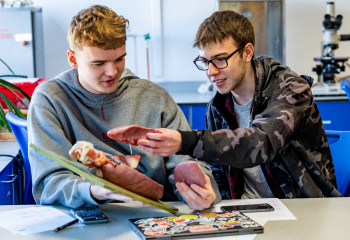
  • Enjoy conducting experiments and learning through practical investigations
  • Are considering a career in healthcare, research, environmental science, or biotechnology
What Will You Explore?

In the Biology A Level course, you will dive deep into the core principles of biology across a wide range of topics. Some of the key areas you’ll explore include:

  • Cell Biology: Understanding the structure and function of cells, the building blocks of life
  • Genetics: Exploring how traits are inherited and the role of DNA in controlling the characteristics of living organisms
  • Evolution and Biodiversity: Investigating how species evolve and adapt, and the importance of maintaining biodiversity
  • Human Biology: Gaining insights into the systems that keep the human body functioning, from respiration to the nervous system
  • Ecology: Examining ecosystems and the impact of human activities on the environment
  • Biochemistry: Learning how chemical processes underpin the biological systems of life
  • Microbiology and Disease: Studying pathogens, disease transmission, and how the immune system defends against infections

Throughout the course, you’ll engage in practical experiments, fieldwork, and case studies that bring biological theory to life.

Click here for link to Exam Board specification for Biology A Level

Skills You Will Develop

Studying Biology A Level will help you develop a wide range of valuable skills, including:

  • Analytical Thinking: Breaking down complex biological processes and making evidence-based conclusions
  • Problem-Solving: Using scientific methods to approach and solve biological challenges
  • Data Interpretation: Analysing and interpreting scientific data, graphs, and results from experiments
  • Laboratory Techniques: Gaining hands-on experience with essential biological experiments and methods
  • Research Skills: Conducting investigations, reviewing scientific literature, and formulating hypotheses
  • Critical Thinking: Assessing the reliability and significance of scientific information and current research
  • Communication: Clearly presenting scientific findings and arguments, both in written reports and oral presentations

These skills not only support your progression in biology but are also highly valued across many academic and professional fields.

Transferable Skills and Real-World Impact

Biology A Level equips you with highly transferable skills that are relevant in many fields beyond biology. Your ability to critically evaluate information, solve complex problems, and understand scientific data will be useful in careers like:

  • Business and Management
  • Law (especially environmental or medical law)
  • Technology and Innovation
  • Public Policy and Global Development
  • Communication and Journalism

Studying biology also allows you to make a real-world impact. Whether it’s contributing to medical breakthroughs, addressing environmental challenges, or helping tackle global health crises like pandemics, your knowledge and skills in biology will empower you to contribute meaningfully to society.

Where Can Biology A Level Lead?

A Level Biology opens doors to numerous opportunities in both further education and careers across a range of fields.

Further Education:

Many students who complete Biology A Level go on to study related subjects at university, including:

  • Biology
  • Medicine and Dentistry
  • Veterinary Science
  • Biomedical Science
  • Environmental Science
  • Biochemistry
  • Genetics
  • Pharmacology
  • Neuroscience
  • Marine Biology
  • Forensic Science

Career Opportunities:

Biology A Level is a stepping stone to an array of exciting and impactful careers, such as:

  • Healthcare Professions: Doctors, dentists, nurses, physiotherapists, and pharmacists all require a deep understanding of biological processes.
  • Scientific Research: Working in laboratories to make new discoveries in genetics, disease prevention, or environmental conservation.
  • Environmental Science and Conservation: Leading efforts to protect biodiversity, combat climate change, and promote sustainable practices.
  • Biotechnology and Pharmaceuticals: Developing new medical treatments, vaccines, and biotechnological solutions.
  • Education: Inspiring the next generation of students as a biology teacher or lecturer.
  • Agriculture and Food Science: Improving crop yields, developing sustainable farming methods, or ensuring food safety.

Where next?

Apply Now
Useful Information

For more information contact:

James Bailey

Position: Director of Curriculum for Science, Social Sciences & Care

Apply for 26/27 now!

Let's Go