Apprenticeships

Supporting your future

Apply
T Level Technical Qualification in Education and Early Years Vocational
Vocational, Level 3

Entry Requirements

Grades 9-4 in English and Maths and three or more GCSEs at grades 9-4 or A*- C.

Must show an interest for working with children.

Assessment

• Two written examinations, employer-set project (ESP) , assignments

Course Duration

• Two years

Exam Board

• NCFE

Why Choose T Level: Education and Childcare

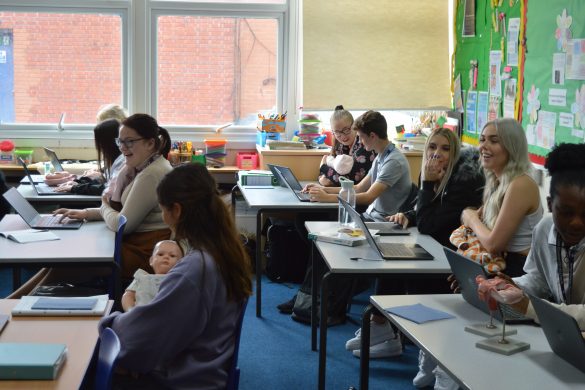
Are you passionate about shaping young minds and making a lasting difference in children’s lives? The Education and Childcare T Level is a cutting-edge qualification designed to prepare you for a career in early years education, primary teaching, or learning support. T Levels are developed in collaboration with employers to ensure you’re learning the skills that the sector really needs. If you’re ready to combine in-depth study with real-world experience, this course is your ideal route into a rewarding profession in education.

The T Level course is the equivalent of 3 A Levels, and is a two-year course that has been designed collaboratively by employers and businesses to ensure that the material delivered prepares learners for the demands of work and industry needs.

What You Will Explore

What You Will Explore with the Childcare Pathway

The T Level in Education and Childcare provides an in-depth exploration of the key areas essential for a career in early years education, including both theoretical and practical knowledge. Throughout your studies, you will gain a comprehensive understanding of the following:

  • Child Development (Birth to 19 Years): Learn about the stages of physical, cognitive, emotional, and social development, and understand how these influence learning and behaviour in children and young people.

  • Supporting Early Years and Primary Education: Develop the skills needed to support children’s learning and development in educational settings, from nurseries to primary schools.

  • Safeguarding and Child Protection: Explore how to create safe environments for children, with a focus on safeguarding practices and responding to concerns about child welfare.

  • Special Educational Needs and Disabilities (SEND): Understand the diverse needs of children with SEND and how to provide tailored support to promote inclusive learning.

  • Curriculum Planning and Assessment: Learn how to design, plan, and evaluate educational activities that meet children’s developmental milestones and educational goals.

  • Professional Roles and Responsibilities: Discover the various roles within early years education, including understanding the professional standards and responsibilities that support children’s well-being.

Core Studies in Education and Childcare

As part of your core studies, you will explore a broad range of topics that are essential to working in the childcare sector:

Core Studies:

  • Element 1: The wider context – Explores factors impacting early years education, including government policies, legislation (e.g., EYFS), community, family dynamics, and the role of multi-agency working in providing quality care.
  • Element 2: Supporting education – Focuses on practitioners’ role in supporting children’s learning, including strategies for behaviour, inclusive environments, and working with families to support educational progress.
  • Element 3: Safeguarding, health and safety, and wellbeing – Covers safeguarding principles, health and safety regulations, promoting emotional wellbeing, and creating safe environments for optimal child development.
  • Element 4: Behaviour – Focuses on managing children’s behaviour, promoting positive behaviour, setting clear expectations, and supporting social-emotional development.
  • Element 5: Parents, families, and carers – Emphasizes building strong relationships with families, effective communication, and supporting children’s needs through collaboration and cultural understanding.
  • Element 6: Working with others – Highlights collaboration with multi-agency teams to support child development, ensuring effective communication and sharing information for the best outcomes.
  • Element 7: Child development – Focuses on the physical, cognitive, social, and emotional development of children from birth to eight, including milestones and the role of practitioners in supporting development.
  • Element 8: Observation and assessment – Covers observation techniques and assessments used to track and plan for children’s learning, ensuring support is tailored to their needs.
  • Element 9: Reflective practice – Encourages self-evaluation and continuous professional development to improve care, teaching methods, and interactions with children.
  • Element 10: Equality and diversity – Focuses on promoting an inclusive environment where all children are treated fairly, supporting their diverse needs and backgrounds.
  • Element 11: Special educational needs and disability – Covers strategies to support children with SEND, including early intervention, legal frameworks, and creating inclusive learning environments.
  • Element 12: English as an additional language – Focuses on supporting children whose first language is not English, using strategies to promote language development and communication skills.
  • Occupational Specialism: Early Years Educator
  • Supporting and promoting children’s play, development, and early education – Focuses on fostering children’s learning through play, aligning activities with developmental milestones and the Early Years Foundation Stage (EYFS).
  • Developing relationships with children to facilitate their development – Emphasizes building trust and positive communication to support children’s emotional and social growth.
  • Planning, providing, and reviewing care, play, and educational opportunities – Covers planning and evaluating activities that promote children’s cognitive, emotional, and physical growth, ensuring continuous progress.
  • Safeguarding and promoting the health, safety, and wellbeing of children – Focuses on safeguarding, health and safety regulations, and strategies to support children’s emotional and physical wellbeing.
  • Working in partnership with colleagues, parents, carers, and other professionals – Highlights collaboration with families and other professionals to support children’s development and ensure the best outcomes.


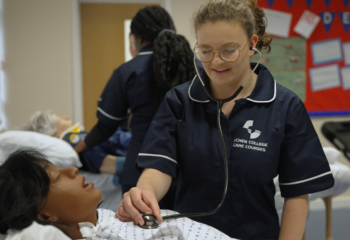
Please note: students who take any Care course will be required to pay for a DBS (Disclosing and Barring Service) check and be required to wear a course uniform in placement.

Click here for link to Exam Board specification for T Level Education and Childcare

Skills You Will Develop

Through a blend of classroom learning and industry placement, you’ll build valuable skills that prepare you for direct employment or higher-level study, including:

  • Planning and delivering learning activities
  • Observing and assessing children’s progress
  • Creating inclusive and engaging environments
  • Applying child psychology and development theory
  • Working collaboratively with children, parents, and professionals

You’ll complete a minimum of 750 hours of high-quality industry placement, giving you real experience and confidence in a working education setting.

As well as specialist knowledge, you’ll gain a wide range of transferable skills that will serve you in any professional setting:

  • Communication and teamwork
  • Initiative and problem-solving
  • Organisation and time management
  • Resilience and adaptability
  • Ethical and reflective practice

Your training will have a real and immediate impact, supporting children’s learning, wellbeing, and development in meaningful ways.

Where Can T Level Education and Childcare Lead?

Further and Higher Education

  • Direct entry into employment as an Early Years Educator, Teaching Assistant, or Learning Support Assistant
  • Progression to university to study:
    • Primary Education with QTS
    • Early Childhood Studies
    • Child Psychology
    • Social Work or Youth Work

Career Opportunities

  • Early Years Practitioner
  • Nursery Manager (with further training)
  • Primary School Teaching Assistant
  • Special Educational Needs (SEN) Support Worker
  • Progression to Teacher Training (e.g., PGCE or School Direct)

T Levels are highly valued by universities, employers, and training providers. This qualification opens doors to a wide range of professional roles in education and beyond.

The Care Department at Itchen continues to see successful outcomes for our students, with 100% of our students progressing into related occupations, apprenticeship or degree courses.

The Child Care courses offer 100% pass rate year after year. There is excellent progression for all our students, with all the second years gaining employment, apprenticeship or university placements.

Where next?

Apply Now
Useful Information

For more information contact:

James Bailey

Position: Director of Curriculum for Science, Social Sciences & Care

Apply for 26/27 now!

Let's Go