Supporting your child’s future
Providing services and facilities to our local communities
Grades 9-4 in English, Maths and Science and three or more GCSEs at grades 9-4 or A*- C.
Are you passionate about improving people’s health and wellbeing? The T Level in Health offers a unique opportunity to develop the skills and knowledge needed for a successful career in the health sector. This qualification is designed for those who want to make a real difference in people’s lives, whether it’s working directly with patients, supporting health teams, or advancing in healthcare management. The T Level Health qualification at Itchen Sixth Form College is employer-led and combines academic study with a substantial industry placement, providing you with the perfect foundation for your future career in healthcare.

You will work through the following content as part of the T Level Health.
Working within the health and social care sector – Covers the roles and responsibilities of professionals, the structure of services, key values (dignity, respect, confidentiality), multi-agency working, safeguarding, professional standards, and the importance of communication, teamwork, and continuous development.
The healthcare sector – Focuses on the structure, purpose, and function of UK healthcare services, roles of professionals, person-centred care, safeguarding, infection prevention, and legislation. Prepares learners to work safely, following legal and ethical guidelines.
Health, safety, and environmental regulations – Focuses on maintaining safe, compliant environments through legislation like the Health and Safety at Work Act, COSHH, RIDDOR, risk assessments, and infection control. Ensures safety for both service users and staff.
Health and safety regulations in healthcare – Covers legislation like the Health and Safety at Work Act, Manual Handling, COSHH, and RIDDOR. Focuses on risk management, infection prevention, PPE, fire safety, and emergency procedures in healthcare settings.
Managing information and data in health and science – Covers secure handling, storage, and sharing of data, confidentiality, GDPR, and ethical considerations. Explores data collection, recording, and reporting for decision-making and improving care.
Managing personal information – Focuses on securely handling personal data, data protection laws (e.g., GDPR), confidentiality, and accurate record-keeping. Ensures compliance with legal and organisational policies to maintain trust.
Good scientific and clinical practice – Emphasizes accuracy, reliability, ethical conduct, and adherence to protocols in clinical and scientific work. Stresses professional integrity, risk management, and documentation to ensure quality care.
Providing person-centred care – Focuses on delivering care based on individual needs, preferences, and values. Covers care planning, active listening, building relationships, and promoting independence and wellbeing.
Health and wellbeing – Explores factors influencing physical, mental, and emotional health, including lifestyle, social, economic, and environmental factors. Emphasizes holistic approaches to improving overall health and quality of life.
Infection prevention and control – Focuses on infection control strategies like hand hygiene, PPE, and maintaining a safe environment. Covers infection transmission, risk assessments, and reporting to protect patients and staff.
Safeguarding – Focuses on protecting vulnerable individuals from harm, abuse, and neglect through legislation, recognising signs of abuse, reporting concerns, and creating safe environments. Highlights ethical considerations and proactive safeguarding measures.
We offer one occupational speciality:
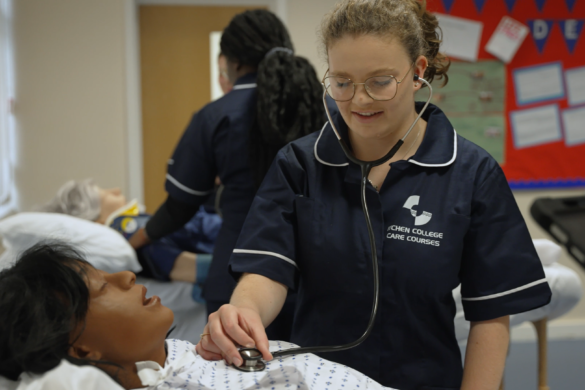
Supporting the adult nursing team – Focuses on the roles and responsibilities of support staff working with adult nurses. It covers assisting with patient care, monitoring vital signs, supporting daily activities, and effective communication. Emphasizes nursing protocols, patient safety, compassionate care, and contributing to care planning to enhance patient outcomes.
Work Placements
T Level Health students have the valuable opportunity to put theory into practice through a series of mandatory work placements. In the first year this is in a wide range of care home settings, and in the second year (depending on occupational specialism) in a wide variety of related hospital settings.
Please note: students who take any Care course will be required to pay for a DBS (Disclosing and Barring Service) check.
Click here for link to Exam Board specification for T Level Health
The T Level Health qualification equips you with the practical and theoretical skills needed to work effectively in the health sector. Key skills developed include:
The T Level Health qualification is not only about gaining specialised healthcare knowledge—it also teaches valuable transferable skills that will benefit you throughout your career:
The skills and experience you gain will have a tangible real-world impact, improving health outcomes, supporting vulnerable individuals, and contributing to the smooth running of healthcare systems.
Further / Higher Education
After completing the T Level Health qualification, you can continue your studies with:
Career Opportunities
The T Level Health qualification opens up a wide range of career options in health, such as:
With further education or experience, you can pursue careers in:

For more information contact:
James BaileyPosition: Director of College Operations